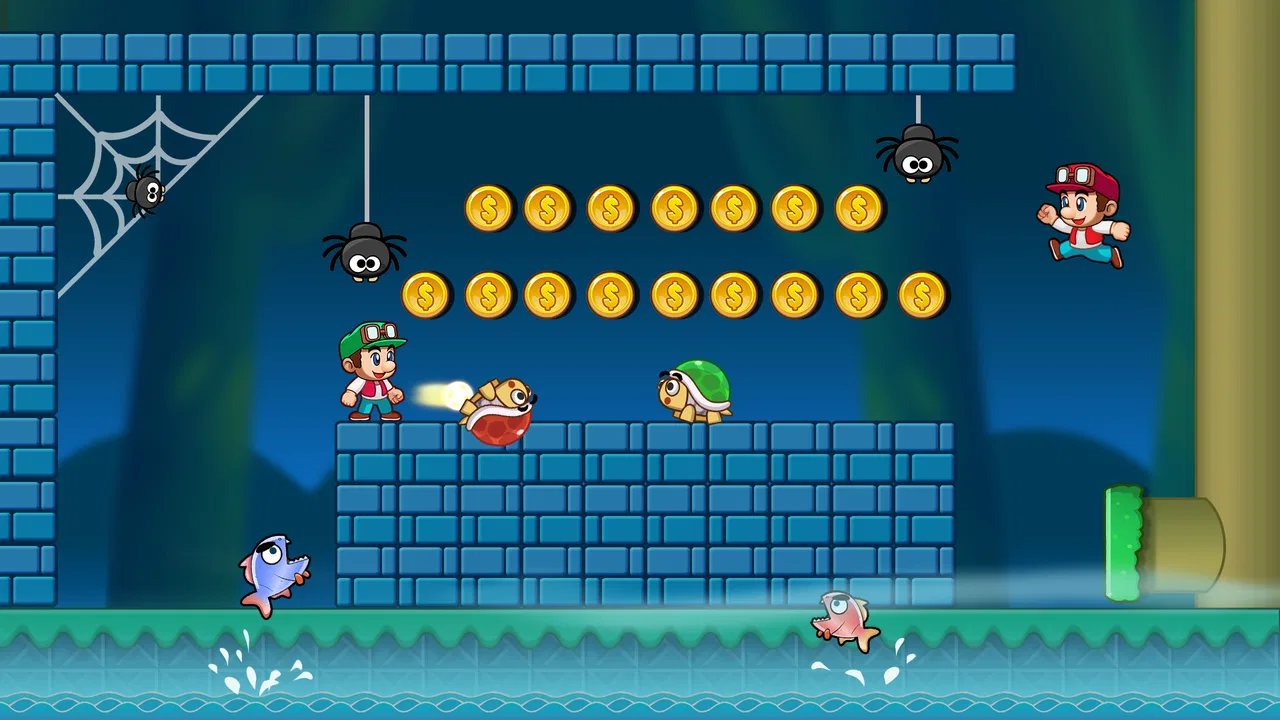
Super Mirano's World:Jump&Run
- 4.6
- Rating
- 1.00M
- Installs
- Free
- Price

 Analysis by App-foxy
I spent time with Super Mirano's World:Jump&Run as a light adventure game built around platforming, exploration, and the satisfaction of reaching the next small objective. It is free to play, easy to understand at first glance, and clearly aimed at players who enjoy the familiar rhythm of moving through colorful stages, solving simple obstacles, and looking for surprises rather than managing a complicated role-playing system.
That straightforward approach is also the game’s main appeal. I could begin without learning a large collection of rules, and the focus stays on what is happening in front of me. The game comes from HardCore Soft and has attracted more than a million installs, with an average score of 4.7 from roughly 26 thousand ratings. Those numbers suggest that its accessible platform-adventure formula has found a sizeable audience, but they do not remove the need to look at how the experience actually feels over time.
My overall impression is positive, with an important qualification: this is best approached as a compact, casual adventure rather than as a deep platforming challenge. It works well when I want a quick session with visible goals, but players expecting the precision, variety, or long-term complexity of a premium console platformer may find the design more limited. The age rating is Teen, and the game is free to download, although optional purchases range from $0.99 to $49.99 per item.
You May Also Like

 Blood Strike: 2.5 Anniversary
Blood Strike’s Loadouts Turn Every Drop Into a Tactical Gamble
A close look at Blood Strike’s custom loadouts: how fast access to signature weapons reshapes its battle royale rhythm, rewards preparation, and narrows the gap between fights.

 Pandora - Music & Podcasts
Pandora’s Music Is Easy to Start, but Harder to Recover
Pandora’s strength is its low-effort path from a seed to a station. Its weak spot is how much confidence it asks you to place in connection, setup, and quiet recovery.

 8 Ball Pool
 Is Built on Rivalries, Rematches, and Routine
A close look at the rivalries, rematches, shared routines, and unanswered safety questions that turn a quick pool match into a persistent mobile community.

 Samsung Music
’s Quiet Strength Is Playing What You Already Own
Its reach comes less from spectacle than from dependable access to a personal library. That simplicity is both the app’s strongest retention engine and its ceiling.

 AccuWeather: Weather Radar
AccuWeather Review: A Quick, Clear Forecast for Everyday Decisions
For everyday plans, the best forecast is the one you can understand quickly. AccuWeather makes rain timing, radar, and local conditions easy to act on, with a few trade-offs.

 Hill Climb Racing
Why Hill Climb Racing Still Turns Crashes Into One More Run
A tiny car, a bumpy hill and one more upgrade: Hill Climb Racing keeps resurfacing because its simple chaos makes every near-miss feel personal.
More From Our News Desk
View All News


How the first goals create momentum
The opening experience benefits from a clear sense of direction. A platformer needs to answer one question quickly: what should I do next? Here, the answer comes naturally through movement, nearby obstacles, and the promise of discovering something beyond the current section. I do not need to study a dense interface before enjoying the basic loop, which makes the game approachable for someone who normally avoids elaborate adventure titles.
Early goals matter because they turn movement into purpose. Simply walking or jumping through a stage can become repetitive, but reaching a visible area, overcoming an obstacle, or investigating an unusual part of the environment gives each short attempt a reason. I found that the game is most enjoyable when I treated these objectives as small steps rather than rushing toward a distant finish.
A useful habit is to pause briefly before moving through a busy section. Platform games often reward noticing the shape of the route instead of reacting to every obstacle at the last possible moment. In this title, that mindset makes the early stages feel less like random movement and more like a series of manageable decisions. I look at the next safe landing, check whether the surrounding space may hide something interesting, and then commit to the jump.
This approach also helps younger or less experienced players. The game does not demand that a newcomer understand advanced genre conventions immediately. Someone familiar with mobile controls can start experimenting almost at once, while a more experienced player can focus on cleaner movement and faster problem solving. That broad entry point is one reason I can imagine recommending it for short shared sessions, especially when a friend wants an adventure game without a steep learning period.
Exploration works best when I slow down
The store summary emphasizes exploring, solving, and uncovering surprises, and I think that description is most useful when read as a guide to the intended pace. I get more from the stages when I resist treating them as a straight line. Looking around before moving on can reveal the difference between merely completing a section and actually engaging with it.
One of my more practical tips is to separate “progress” from “completion.” If I only chase the obvious route, I may finish the immediate task but miss the small moments that give the adventure its character. When I take a few extra seconds to inspect the edges of an area, I feel more involved in the world and less as though I am simply clearing a sequence of screens.
That does not mean every player will enjoy this slower approach. If your ideal platformer is built around constant speed, difficult timing, and repeated attempts to shave seconds from a route, the exploratory side may feel too gentle. This game is more comfortable as a relaxed adventure than as a pure test of reflexes.
Progress signals and the feeling of moving forward
Good progression does not always require a complicated upgrade tree. In a small platforming adventure, progress can come from understanding the environment better, reaching a new part of a stage, and becoming more confident with the movement. I noticed that the game’s appeal depends heavily on these immediate signals. Each successful section tells me that I have learned something or handled a situation more effectively than before.
The most satisfying progress is therefore moment to moment. I see a route that initially looks awkward, try a different approach, and eventually get through it. That kind of improvement is more personal than simply watching a number rise. It also gives the game a gentle learning curve: I can build familiarity through play instead of reading instructions for every possibility.
For players who need a strong long-term reward structure, this may be the point where expectations should be adjusted. The experience is not compelling because it overwhelms me with systems. It is compelling when the next area, obstacle, or discovery is enough to make one more attempt worthwhile. That is a perfectly valid design choice, but it means the game’s staying power depends on whether the core platforming loop continues to feel pleasant for you.
I also recommend setting a simple personal target before each session. I might decide to finish the next section, explore more carefully than I did last time, or practice a difficult movement until it feels natural. This gives short play sessions a shape and prevents the free-to-play format from becoming the only reason to continue. The game is more enjoyable when I choose the goal rather than letting an endless urge to keep tapping dictate the session.
What the version and device requirements mean in practice
The current version is 1.7.9.185, and the minimum operating system is Android 6.0. That makes the game accessible to people using older Android hardware, at least from a software-version perspective. In practical terms, I would still judge the experience by how comfortable the device feels during play, because platforming depends on responsive input and a clear view of the action.
That is especially relevant for players using a smaller or older phone. A game can technically run while still feeling less comfortable if controls are crowded or movement becomes difficult to read. I would try a short session before committing to longer play, particularly if precise jumps are not feeling natural. The lower entry requirement is welcome, but it should not be confused with a guarantee that every device will offer the same comfort.
The game is also marked Teen, so I would check that it suits the intended player before handing over a device. For adults, the rating is a useful reminder that the experience is not positioned strictly as a children’s title, even though its accessible platforming may appeal to younger players with supervision where appropriate.
Challenge, pacing, and the difficulty curve
The pacing is strongest when the game lets me alternate between movement, observation, and problem solving. A constant stream of demanding jumps can become tiring on a phone, while a route with no meaningful obstacle loses energy. The adventure format gives the game room to breathe, and I found that the lighter sections make the more involved moments feel more noticeable.
My advice is not to interpret a failed attempt as a reason to rush. Repeating the same action without changing the approach is usually less productive than examining the route. I watch where I land, consider whether I am moving too early, and make one adjustment at a time. This turns frustration into a small experiment and makes the challenge feel fairer, even when my first instinct is to blame the controls.
There is a trade-off here. Players who want a consistently punishing experience may find the challenge curve too restrained, while casual players may appreciate not being thrown immediately into an intimidating obstacle course. The game’s strongest audience is somewhere in the middle: people who want enough resistance to make success satisfying, but not so much that every session becomes a test of patience.
Short sessions suit the pacing particularly well. I can play while waiting for an appointment, during a commute break, or at home when I only have a few minutes to spare. In that everyday scenario, I would rather have a game that gives me a clear next step than one that requires a long uninterrupted commitment. I can complete a small objective, stop, and return later without needing to reconstruct a complicated strategy.
On the other hand, if you are searching for a game to occupy an entire evening with deep character builds, a large narrative, or highly technical movement, this is probably not the right choice. A conventional premium platformer may offer more elaborate level design and a stronger sense of authored progression. A competitive action game may be better if your priority is mastery against other players. This title earns its place through simplicity and accessibility, not through scale.
Retention pressure and the free-to-play decision
Because the game is free, trying it involves little financial commitment. That is helpful for anyone who wants to test the controls and decide whether the pacing fits. The presence of optional purchases changes the decision once I am invested, though. Items cost between $0.99 and $49.99, so I would treat spending as a separate choice rather than as a normal part of learning the game.
My practical recommendation is to play several sessions before buying anything. First, decide whether the basic movement and exploration are enjoyable on their own. If the answer is no, a purchase is unlikely to fix the underlying mismatch. If the answer is yes, then consider whether an optional item genuinely improves the way you want to play or merely encourages another impulse purchase.
This is one of the most important trade-offs for families. A free download can make the game easy to install, but the available purchase range means I would use the device’s purchase controls and discuss spending expectations in advance. That is not a criticism of the adventure itself; it is simply sensible preparation for any free-to-play game with optional items.
I also think retention should come from the game’s goals rather than from pressure to spend. The healthiest way for me to use it is to decide when a session is finished: after reaching a certain point, solving a particular obstacle, or exploring a section thoroughly. If I find myself continuing only because I feel pushed to unlock something immediately, I take that as a sign to pause.
Compared with a paid platformer, the free entry is a clear advantage because I can judge the experience before paying. Compared with an entirely offline, one-time-purchase alternative, the optional purchase structure may feel less predictable. The better choice depends on what matters most to you: low-risk access and casual experimentation, or a cleaner upfront ownership model.
Who will enjoy it most
I would recommend this adventure to players who like approachable mobile platformers, short exploration sessions, and goals that can be understood without a long tutorial. It is a good fit for someone who wants to relax with a colorful, character-led journey and does not need a large inventory, elaborate strategy layer, or competitive ranking system to stay interested.
It can also work for a returning player who wants a familiar style of game on an Android phone. The low barrier to entry makes it suitable for trying between other activities, while the exploratory details give careful players a reason not to sprint through every section. I especially like it for people who enjoy improving through observation rather than through constant high-speed reactions.
I would skip it if your main requirement is demanding precision. Players who want every jump to feel like a serious technical exercise may prefer a harder specialist platformer. I would also look elsewhere if you need a substantial story, extensive customization, or a progression system that remains the central attraction for dozens of hours. This game’s strengths are concentrated in its immediate adventure loop.
Another group that may want to be cautious is anyone who dislikes optional purchases on principle. Since the game is free but includes items in a broad price range, a paid alternative may provide a more comfortable experience if you want to avoid purchase decisions entirely. The free download is useful for testing, but it does not make the monetization question irrelevant.
My verdict on the progression
After playing it with attention to its goals, signals of progress, challenge, and pacing, I see Super Mirano's World:Jump&Run as a pleasant, accessible adventure rather than a genre-defining platformer. Its strongest quality is that it makes forward movement feel understandable: explore the space, deal with the obstacle in front of you, and look for the next small surprise. That structure is easy to return to when I want something uncomplicated.
The progression works best when I set modest objectives and give the environments enough attention to reward curiosity. The game does not need a complicated unlock system to create momentum because its immediate challenges can provide that motivation. Still, players who need constant novelty or a highly demanding difficulty curve may reach the limits of the formula sooner than expected.
With its free price, Teen rating, Android 6.0 minimum, and current version 1.7.9.185, it is an easy game to test on a compatible device. I would begin without spending, check whether the controls feel comfortable, and decide whether the basic adventure is satisfying before considering any optional item. That approach keeps the choice practical and puts the actual gameplay ahead of the store score or install count.
My final recommendation is simple: try it if you want a friendly platforming adventure with clear short-term goals and room for exploration. I would not choose it over a deeper premium platformer for serious mastery, but for casual sessions and approachable discovery, HardCore Soft has created a game that is easy to understand and enjoyable when played at its intended pace.
FAQs for Super Mirano's World:Jump&Run
01What is Super Mirano's World: Jump & Run?
Super Mirano's World: Jump & Run is a vibrant platformer game available on Android and iOS. It combines classic arcade-style gameplay with modern graphics and mechanics. Players navigate through various levels filled with obstacles, enemies, and power-ups, all while experiencing a fun and nostalgic adventure.
02Is Super Mirano's World: Jump & Run free to play?
Yes, the game is free to download and play. However, it offers in-app purchases that can enhance gameplay. These purchases can include additional lives, power-ups, or cosmetic upgrades. Players can enjoy the full game without spending money, but optional purchases can enrich the experience.
03What are the system requirements for Super Mirano's World?
For Android users, the game requires Android 5.0 or later, while iOS users need iOS 10.0 or later. It is compatible with most modern smartphones and tablets. Ensure you have enough storage space, as the game requires approximately 150MB, and a stable internet connection for downloads and updates.
04Does Super Mirano's World: Jump & Run support multiplayer?
Currently, Super Mirano's World: Jump & Run is a single-player experience. The game focuses on individual progression through levels. However, players can connect with friends via social media to share scores and achievements, creating a competitive edge and community engagement.
05What kind of updates can I expect for the game?
The developers regularly release updates to enhance gameplay, fix bugs, and introduce new levels and features. Players can look forward to seasonal events and limited-time challenges that provide fresh content. It’s recommended to keep the app updated to enjoy the latest enhancements and content.
Pros
- Vibrant and engaging graphics enhance gameplay.
- Intuitive controls make it easy to pick up.
- Multiple levels offer varying challenges.
- Regular updates keep content fresh.
- Offline mode available for on-the-go play.
Cons
- In-app purchases can become costly.
- Ads can interrupt gameplay experience.
- Some levels may feel repetitive.
- Limited character customization options.
- Requires significant storage space.

Super Mirano's World:Jump&Run
Gallery